
(TAP) - For generations, the five-fruit tray - a distinctive cultural hallmark of Vietnam’s Lunar New Year has become a symbol of reverence for ancestors while conveying wishes for a new year of peace, prosperity, and reunion. Through the harmonious arrangement of fruits based on the philosophy of the Five Elements, the custom of displaying the five-fruit tray helps preserve the cultural identity of Tet in modern life.
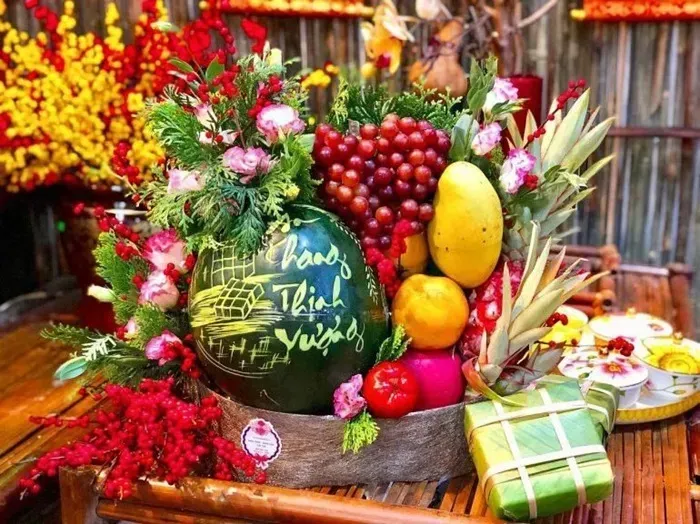
The five-fruit tray is solemnly displayed on the ancestral altar in Vietnamese households, becoming a symbol rich in cultural significance during the Lunar New Year. Source: Haiphong (Pinterest)
Whenever spring arrives, amid the pink peach blossoms of the North, the yellow apricot flowers of the South, or the cool breeze of the Central region, the colorful five-fruit tray displayed on the ancestral altar brings a feeling of warmth and completeness. The number five represents the Five Elements and carries the wish for the “five blessings” - happiness, wealth, longevity, health, and peace. Each fruit holds a special meaning. Pomelos or round watermelons symbolize fullness and good fortune. Pomegranates, with their many red seeds, stand for a big, happy family. Apples represent wealth and success. Figs, papayas, and mangoes express hopes for abundance and a comfortable life. Together, the green, yellow, and red colors blend beautifully, creating a bright and harmonious picture of spring.
Across the S-shaped land of Vietnam, the five-fruit tray also reflects the unique character of each region. In the North, a curved bunch of green bananas, resembling a supporting and protective hand, holds a pomelo or a Buddha’s hand citron placed at the center. Surrounding them are persimmons, mandarins, apples, kumquats and other fruits, blending their colors to create an elegant and balanced arrangement, evoking the image of mutual care and the wish for a family reunion under a warm home.
Meanwhile, in the Central region, where the climate is harsh, simplicity is chosen as a distinctive beauty, “whatever is available is offered, as long as the heart is sincere”. Dragon fruit, bananas, watermelons, custard apples, or oranges and mandarins are arranged in a rustic yet heartfelt manner, reflecting the character of the people here - hardworking, resilient, and deeply affectionate. In the South, the five-fruit tray carries a simple but earnest wish: “wishing for enough to live well”. Custard apple, fig, coconut, papaya, and mango come together to form a New Year greeting for fullness and prosperity. Large, firm fruits are placed at the bottom to create a solid base, supporting the other fruits above, forming a harmonious and vibrant arrangement.
Over time, the five-fruit tray may change in appearance, with more creativity in the way it is arranged. Yet what truly remains is not the sophistication of the display, but the moment when the whole family gathers to choose each ripe fruit, carefully wipe each stem and leaf, and arrange them together amid the cheerful laughter of the days leading up to Tet. It is this very moment that strengthens the bond between generations.
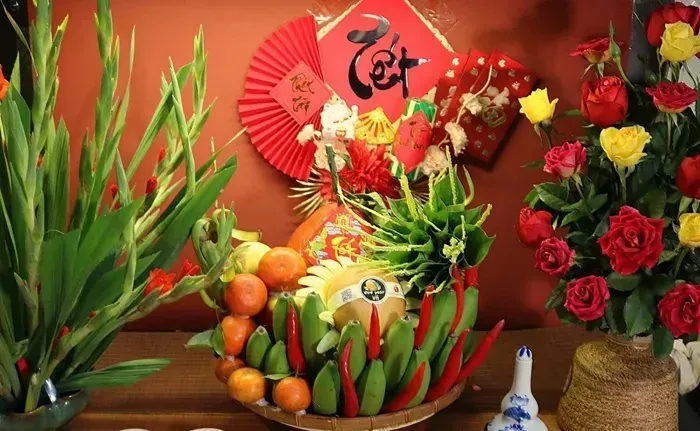
The five-fruit tray prepared for Tet and placed on the ancestral altar expresses gratitude and hopes for a peaceful, abundant, and prosperous new year. Source: RiO (Pinterest)
The five-fruit tray has therefore become deeply rooted in the Vietnamese consciousness as a symbol of origin and faith. Amid the fast pace of modern life, the colors of the spring fruit tray still remind people of the value of reunion, of gratitude, and of hope for a new year filled with peace and prosperity.
Khanh Tan